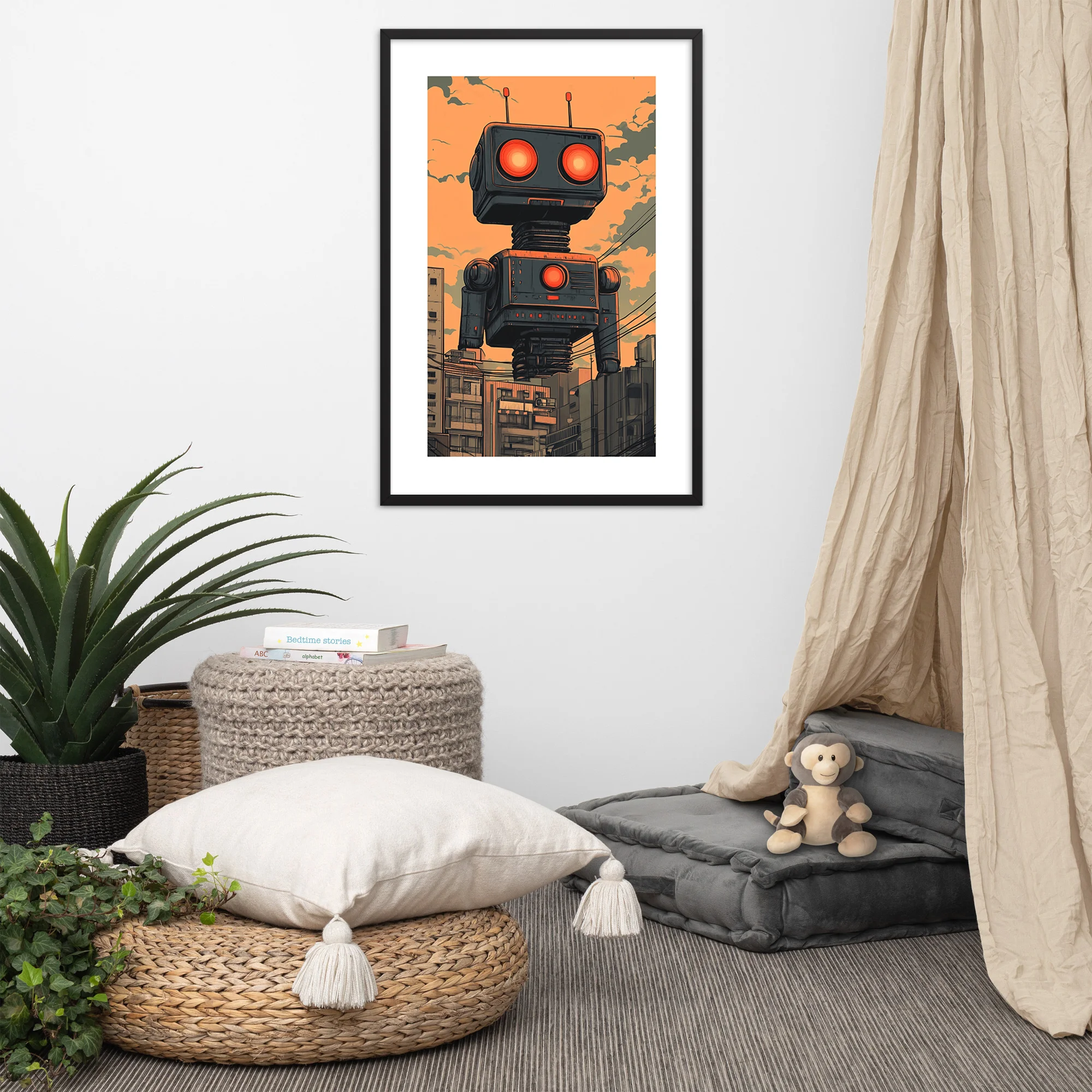
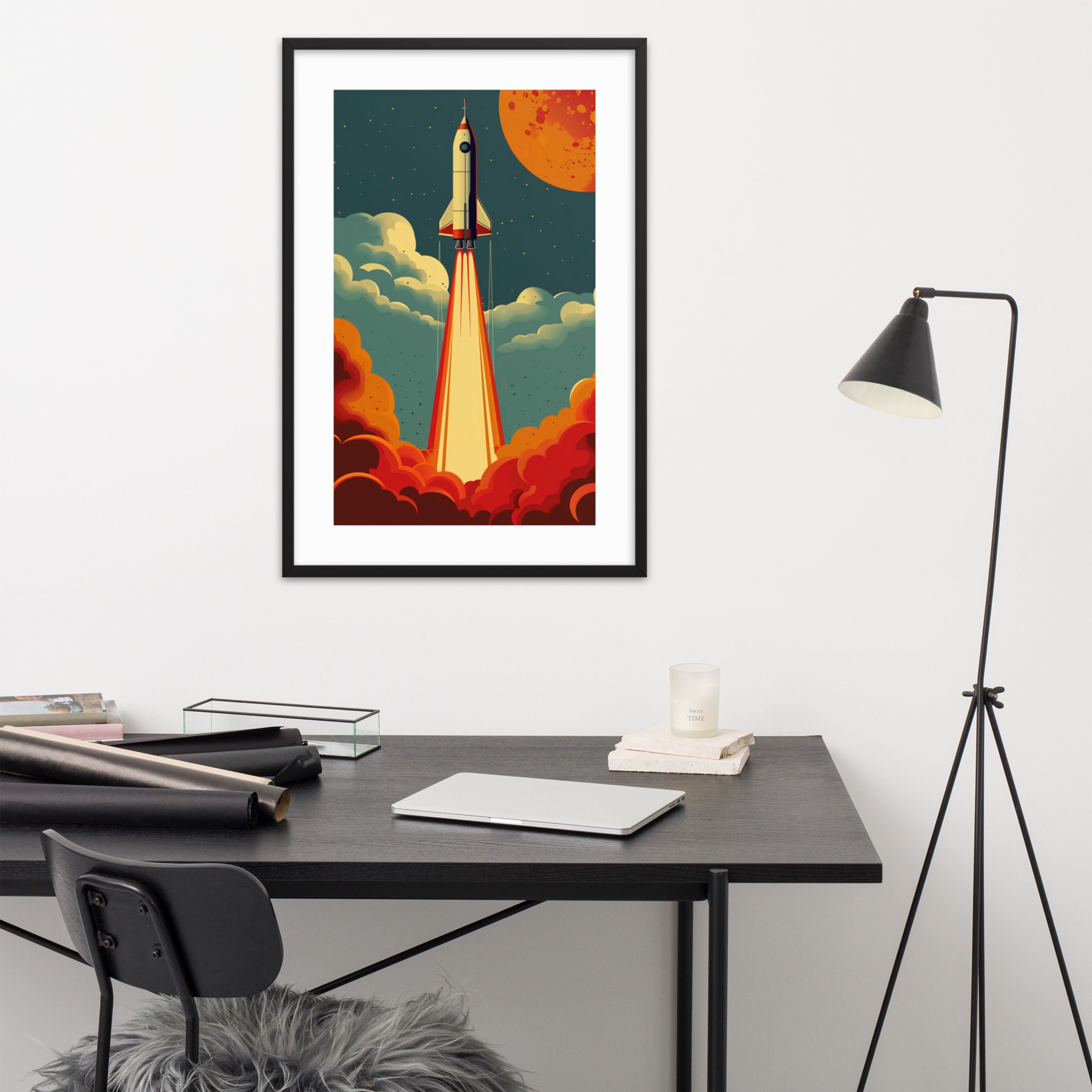
Space age art prints occupy a corner of the wall art market where enthusiasm and specificity converge. The buyer who wants a retro robot print or a space race rocket poster is not looking for something generic. They have a precise aesthetic in mind, formed by a very specific cultural moment: the period from 1957 (Sputnik) to 1969 (Apollo 11) when it seemed genuinely possible that the future would involve robots in the kitchen, weekly rocket flights to orbiting stations, and cities on the moon. That future did not arrive on schedule, but its aesthetic has proven remarkably durable. This guide covers the cultural origins of space age design, what makes retro-futurist imagery work as wall art, who this art is for, and how to use our Space Age collection in a contemporary home.
For context on all seven print collections, see our Complete Guide to Mid-Century Modern Art Prints.
The Space Race and Atomic Age: Where Mid-Century Modern Met the Future
The aesthetic we now call retro-futurism was not retro when it was created. It was simply futurism: the sincere visual imagination of what the next 50 years would look like, produced by artists, illustrators, and designers who genuinely believed that the pace of technological change they were living through would continue and accelerate. The atomic bomb, jet aircraft, television, and the beginning of the space program all arrived within a single decade. If you were a designer or illustrator in 1958, the future was the most compelling subject imaginable.

The visual vocabulary that emerged from this moment is specific and recognizable: streamlined robots with art-deco detailing and cathode-ray-tube eyes, rockets with finned silhouettes derived from the V-2 and early ICBM designs, planetary surfaces rendered in the bold flat colors of science fiction magazine illustration, the starburst and atomic orbital motifs that appeared everywhere from wallpaper to coffee cups. This vocabulary was not the product of any single designer or movement; it emerged from thousands of designers, illustrators, and commercial artists working simultaneously on the same subject matter, processing the same cultural moment through the same era’s graphic design principles.
The MCM design world absorbed this visual vocabulary completely. The Space Age motifs that appeared in printed textiles, ceramics, Formica laminates, and wallpapers of the late 1950s and early 1960s are the domestic expression of the same culture that was producing actual space rockets. The starburst clock on the living room wall was not decorative whimsy; it was a sincere celebration of the technological optimism that defined the era.
Our Space Age collection connects directly to this tradition. Every print draws from the authentic visual vocabulary of the period, with the graphic quality of the best 1950s-1960s science fiction illustration and the design sensibility of the MCM aesthetic.
Retro Robots, Rockets, and Galactic Motifs as Wall Art
The subjects in the Space Age collection divide into three registers, each with its own character and its own appropriate room context.
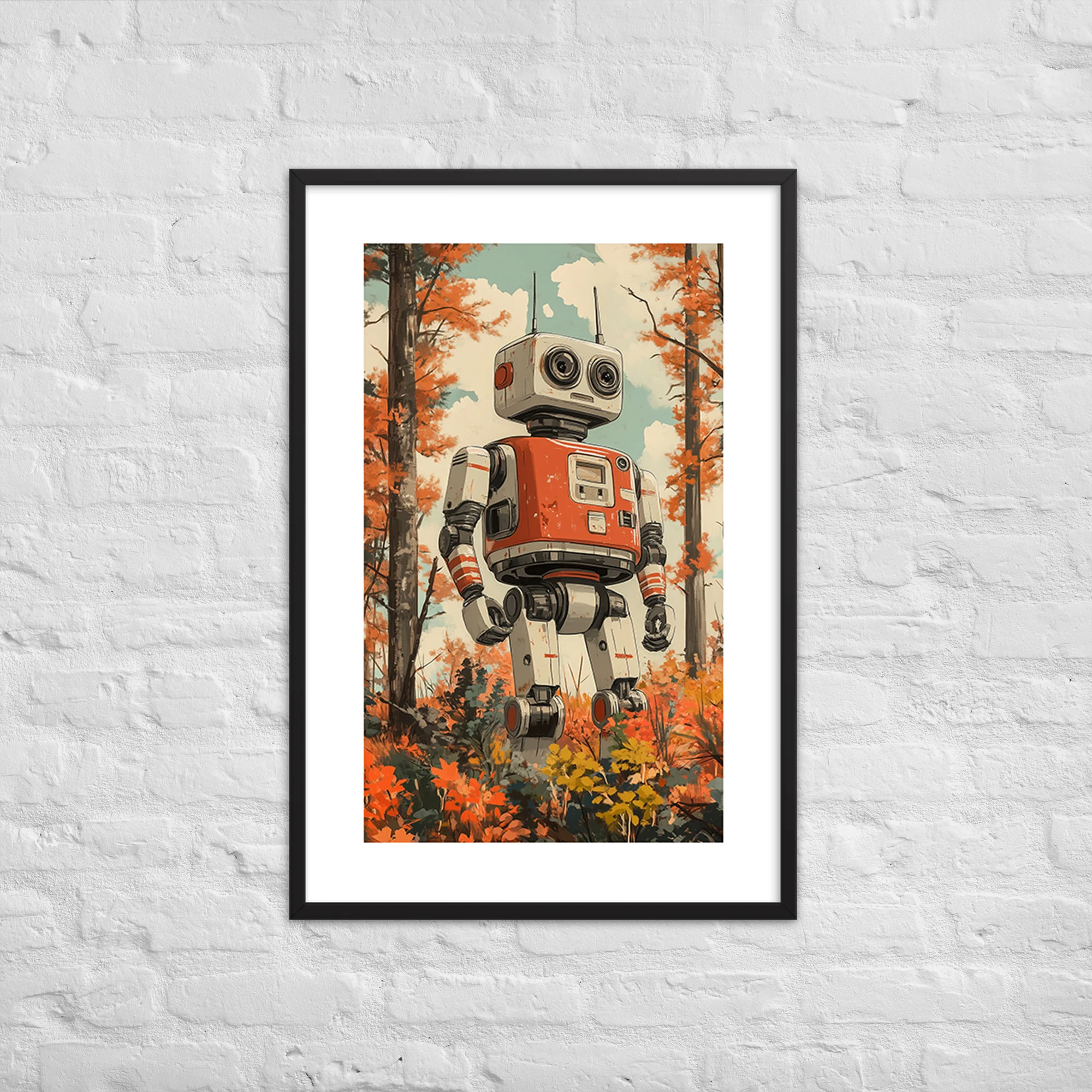
Robots are the most immediately legible space age subject and the one with the broadest appeal. The robot iconography of the MCM period, bulky mechanical forms with visible joints and seams, glowing sensor arrays for eyes, antennae, and the general impression of a being that is machine-shaped but also somehow personal, is now experienced as pure nostalgia: an affectionate celebration of a future that was imagined with more optimism than accuracy. Robo Radiance Revival in our collection captures this aesthetic precisely: a robot rendered with the graphic clarity and warm color palette of the best MCM illustration, neither ironic nor sentimental but simply delighting in the form.
Rockets carry a different register: less playful, more aspirational. The rocket imagery of the Space Race period combined genuine documentary excitement, people really were watching things launched into space for the first time in human history, with illustration aesthetics derived from science fiction’s long tradition of imagining spaceflight before it existed. Rocket to the Stars sits in this tradition: a composition that captures the vertical drama of launch without the documentary heaviness of a photograph. The graphic treatment makes the subject timeless in a way that period photography does not achieve.
Galactic and planetary imagery operates at the most abstract level of the space age visual vocabulary. Planets, star fields, orbital paths, and the deep-space palette of midnight blue, phosphor green, and radium orange: these subjects connect the space age aesthetic to the broader cosmic consciousness of the period, when the first photographs of Earth from space were changing how humanity thought about its own scale and significance. Galactic Voyage and Solar Ascent work in this register: compositions that feel like exploring rather than illustrating, that give the viewer the sense of movement through space rather than observation of it from outside.
Who Buys Space Age Art Prints: Style Personas and Gift Occasions
The space age print buyer is among the most specific audiences in the wall art market, which makes space age prints particularly effective gift purchases. If you know someone who belongs to one of these profiles, a print from our Space Age collection is likely to land well.
The retro-futurism enthusiast is the primary audience: someone who collects vintage science fiction, has opinions about the design quality of mid-century Airstream trailers, and considers the Saturn V rocket a design object as well as an engineering achievement. This person already has a visual framework for MCM space age imagery and will recognize the collection’s graphic quality as the right execution of the aesthetic.
The MCM interior completist is a secondary but significant audience: someone who has invested in MCM furniture and decor and wants their art to be consistent with the era’s full visual vocabulary. The Space Age collection gives these buyers the era’s most distinctive and energetic subject matter in a format consistent with the catalog’s other collections.
The STEM-adjacent buyer or gift recipient is a growing segment: engineers, scientists, programmers, and other technically minded people who feel an affinity for the visual culture that celebrated technological ambition. For this audience, space age art prints communicate something about identity as well as taste. These are also common workplace art choices: a Space Age print in a software engineer’s home office or on a company wall communicates a specific set of values about innovation and optimism.
For gift buying guidance, including which Space Age prints work best for which recipients, see our Mid-Century Modern Art Print Gift Guide.
Where to Hang a Space Age Print: Studies, Kids’ Rooms, and Media Rooms
Space age prints share with geometric prints the characteristic of being best in rooms with some energy and social activity rather than the calm rooms where you want restorative art. They are also particularly suited to rooms with specific identity: the study that is clearly someone’s intellectual territory, the kids’ room that is oriented toward curiosity and exploration, the media room built for engagement.
Studies and home offices are the strongest location. The space age aesthetic communicates forward-looking ambition, which is exactly the register you want in a room designed for focused thinking and creative work. A robot or rocket print above a desk is a declaration about the kind of mind that works there: curious, technically oriented, delighted by the imagination of a previous generation that thought about the future as hard as we now think about the past.
Kids’ rooms are the other primary location, particularly for robot and rocket prints. The playfulness and specificity of space age imagery connects to the same visual culture that shapes most children’s media: robots, aliens, spaceships, and the sense that the universe is full of things to explore and understand. A space age print in a young child’s room is not childish design; it is timeless illustration that will grow with the child and remain interesting long after explicitly “children’s” design has been outgrown.
Media rooms and entertainment spaces suit the Space Age collection’s more galactic and cosmic prints. A large-format Galactic Voyage or Solar Ascent print on the primary wall of a media room creates the sense of a space built for immersion and imagination, which is exactly the right register for a room built around a large screen.
For more on pairing Space Age prints with Geometric work in gallery arrangements, see our Geometric Art Prints Guide.
Shop the Space Age Collection
The full Space Age collection is available in both Black Ink and Red Oak colorways, in all three sizes. The Black Ink colorway is particularly strong for Space Age subjects: the high contrast sharpens the graphic quality of robot and rocket imagery and gives galactic compositions the depth contrast they need. Red Oak is the right choice for buyers who want the space age subject matter with a warmer, more domestic register.
Robo Radiance Revival: the collection’s signature robot composition. Best at 18×24 or 24×36 as a statement piece.
Rocket to the Stars: vertical launch drama in MCM graphic illustration style. The Black Ink colorway is the stronger choice here.
Galactic Voyage: deep-space palette cosmic exploration print. Works at any size; most powerful at 24×36.
Solar Ascent: the collection’s most abstract cosmic composition. Works as a pairing piece with more figurative space age prints.
Browse the complete catalog at our MCM Art Prints Guide.