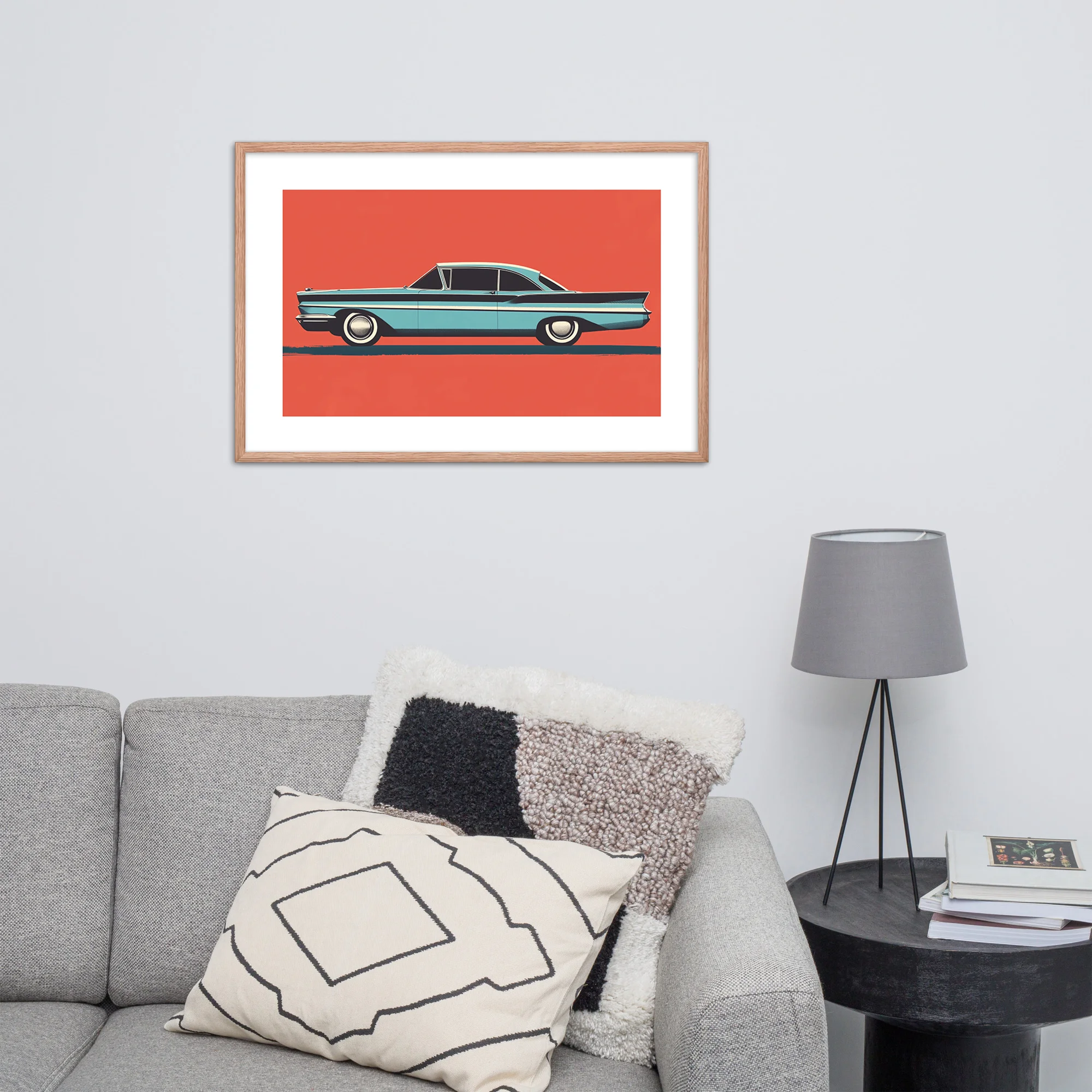
Classic car art prints occupy a specific niche in the wall art market: an audience with strong enthusiasm, high purchase intent, and very specific taste. The buyer who searches “vintage Porsche art print” or “classic car wall art” has already made most of the purchase decision before they see a specific product. They know what they want and why, and what they are looking for is an execution that does justice to the subject. This guide explains how classic automobile imagery connects to the mid-century modern design tradition, what makes a classic car print work as wall art rather than garage ephemera, where these prints belong in a modern home, and which prints from our Classic Cars collection are worth considering first.
For context on all seven collections, start with our Complete Guide to Mid-Century Modern Art Prints.
The American Dream and the Car: Why Automobiles Are Inseparable from MCM Culture
The mid-century modern era and the American automotive golden age are the same era. The Eames Lounge Chair was designed in 1956, the same year General Motors introduced the first Corvette with a V8 engine. The Case Study Houses were built in the late 1940s and 1950s, exactly when Chrysler was producing the tail-finned designs that defined automotive Populuxe. The house and the car were the two primary objects through which the post-war American middle class expressed its aspirations, and design culture treated them with equal seriousness.
The connection runs deeper than coincidence of timing. The automotive designers of the MCM era shared values with the furniture and interior designers: they were interested in new materials, aerodynamic forms, and the expression of function through shape. The sweep of a 1956 Chevrolet tail fin is governed by the same aesthetic logic as the arc of an Eames chair leg: a curve that exists because it is the right form for the function, not because ornament was applied to a functional chassis. Chrome, which is both a finish and an aesthetic choice, appears in MCM furniture design at exactly the same moment and in exactly the same spirit as on the bumpers and trim of the period’s cars.
This shared aesthetic logic is why classic car prints from the MCM era look right on the walls of mid-century modern interiors. They are not a departure from the aesthetic; they are an extension of it. An automotive subject treated with the era’s graphic design vocabulary, bold outlines, flat color, strong composition, belongs in the same visual world as the geometric and architectural prints in the catalog.
The Art of Automotive Nostalgia: What Makes a Classic Car Print Work as Wall Art
Not every image of a classic car makes a good print. The photographs of cars in period brochures, however historically interesting, tend toward documentation rather than composition. The challenge for a classic car print that will live on a wall, looked at daily, is that the image must reward sustained attention rather than serving only as a vehicle for the subject matter.
The prints in our Classic Cars collection approach automotive subjects with the same graphic sensibility that the MCM era brought to its textiles and posters: bold composition, intentional color, and a subject-specific vocabulary that connects to the era’s broader visual language. The chrome curves of a vintage Porsche are treated as design problems in color and light, not as technical documentation. The result is prints that work as art rather than as illustrations of cars.
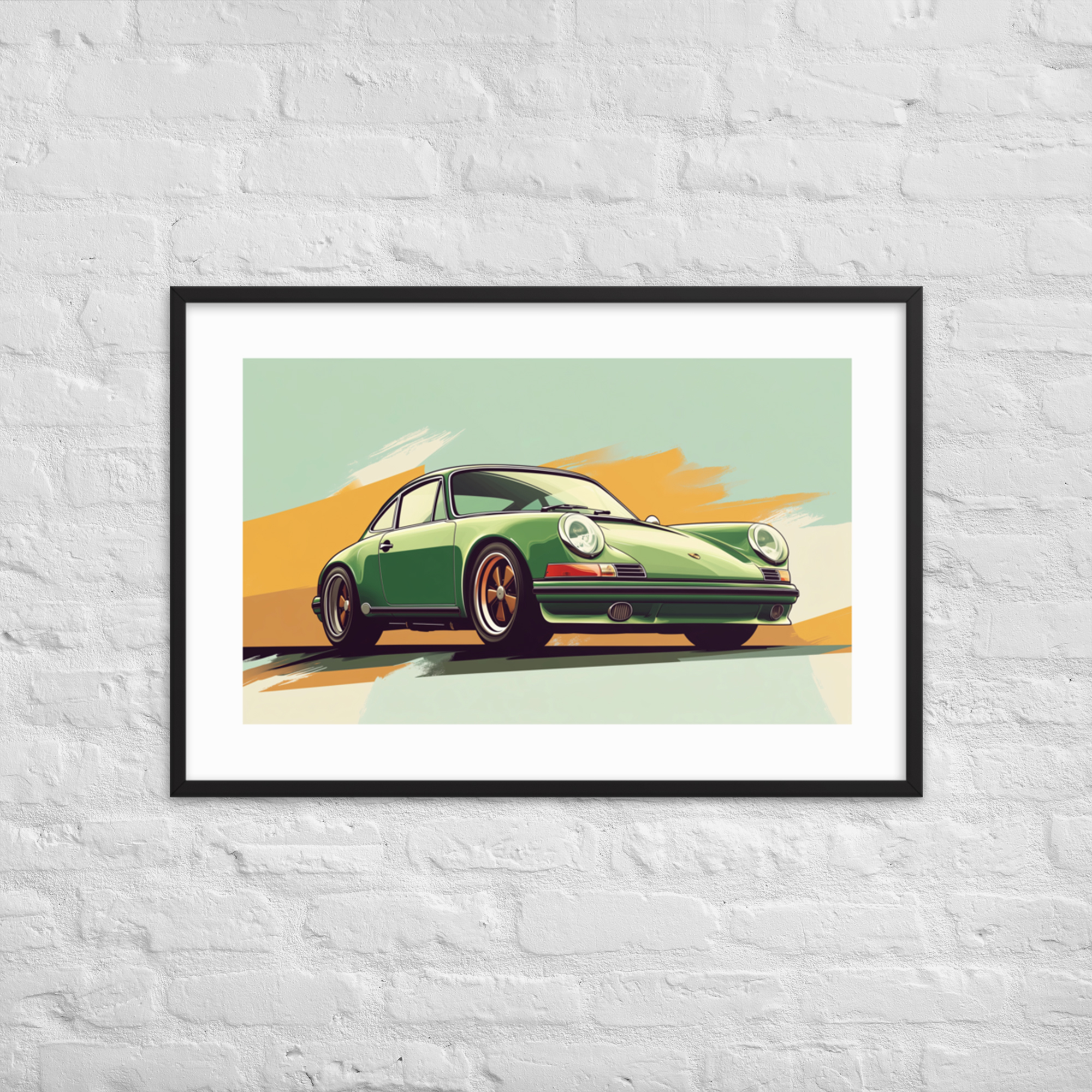
Vintage Porsche Dreams is the collection’s most refined automotive composition. The Porsche silhouette rendered in the era’s characteristic warm palette creates an image that reads as design before it reads as vehicle. In the Red Oak colorway, the amber tones of the print connect to the same warm palette that defines the MCM interior’s walnut and teak finishes. This is not a print for someone who wants their wall to look like a showroom; it is a print for someone who understands that the Porsche 356 is as serious a design object as the Eames Lounge Chair.
Charming Vroom Vintage takes a more playful approach: the composition references the Populuxe aesthetic’s delight in exaggeration, the oversized grilles, the chrome everywhere, the optimism of a culture that had decided the future was going to be bigger and brighter and shinier than anything before. This is the print for someone who loves the era’s cheerful excess rather than its formal elegance.
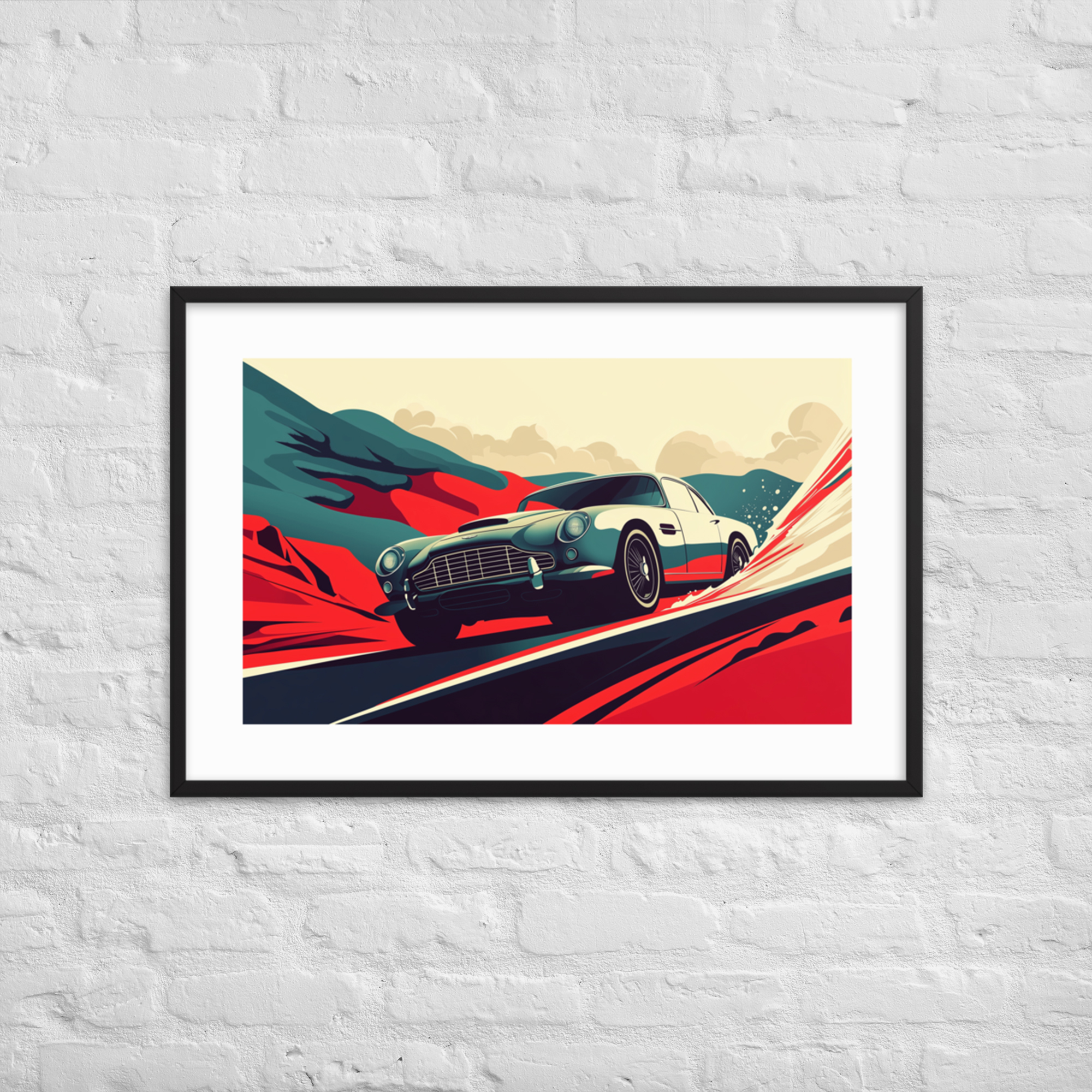
Retro Cruiser Delight and Speedway Classic complete the collection with subjects that cover the spectrum from cruise-night American iron to the romance of endurance racing. The two prints work well together in a gallery arrangement for a room with a strong automotive orientation.
Beyond the Garage: Where Classic Car Prints Belong in a Modern Home
Classic car prints are not garage art. This is the most important reframing for buyers who are uncertain where these prints belong. The assumption that automotive art is only appropriate in a garage or workshop is left over from a period when car culture and design culture were treated as separate domains. The MCM era collapsed that distinction. A Porsche poster hung in the living room of a Case Study House owner in 1958 was not a garage intrusion into the home; it was a celebration of design objects, one of which happened to be a car.
The rooms where classic car prints work best in a contemporary home:
The home office and study are the primary location. The achievement-oriented energy of automotive subjects, particularly racing and performance cars, suits a room designed for focused work. A Porsche print above a walnut desk in a home office reads as taste and identity: it says something specific about the person who works there, which is exactly what art in a work context should do. See our Home Office Wall Art Guide for more on art choices in the office context.
The media room or dedicated entertainment space is the natural secondary location. A room built around a large screen and a comfortable sofa, particularly if it has any MCM furniture or design elements, supports a bold, graphic print with a cultural subject. The Classic Cars collection in this context turns the media room into a space with a specific identity rather than a generic screen room.
The living room works for the right buyer. If your living room has a strong MCM orientation and your taste runs toward the Populuxe end of the spectrum (warm colors, playful forms, unashamed celebration of American commercial culture), a classic car print as a secondary or accent wall piece adds a dimension that the more abstract or natural imagery in the catalog does not.
Classic car prints also make strong gift choices for the right recipient, an audience that often buys for themselves in other categories but does not instinctively think to put automotive art on the wall. For gift buying guidance, see our Mid-Century Modern Gift Guide.
Shop the Classic Cars Collection
The full Classic Cars collection is available in both the Black Ink and Red Oak colorways, in all three sizes. The Red Oak colorway is the stronger choice for most automotive subjects: the warm amber tones connect to the era’s chrome-and-warmth aesthetic more naturally than the high-contrast Black Ink colorway, though the latter works particularly well for racing subjects where stark contrast suits the subject’s energy.
Vintage Porsche Dreams: the collection’s design-forward piece, suited to rooms where the automotive subject is the secondary dimension of a broader MCM aesthetic interest.
Charming Vroom Vintage: Populuxe automotive nostalgia at its most cheerful. Best at 24×36 as a statement piece.
Retro Cruiser Delight: American cruise-night aesthetic in MCM graphic treatment. Works well paired with Speedway Classic in a two-print arrangement.
Speedway Classic: racing heritage rendered with the era’s bold composition. The Black Ink colorway is particularly strong here.
Browse the complete catalog at our MCM Art Prints Guide.